

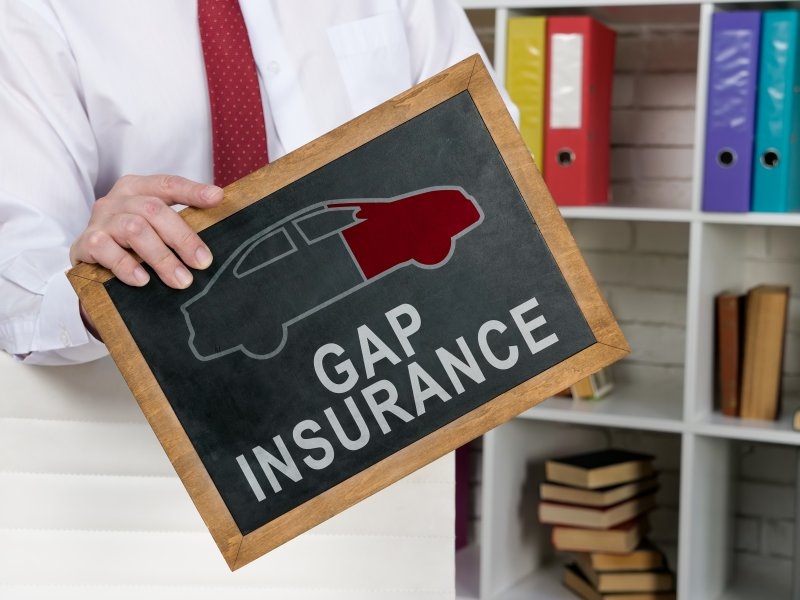
Here's something most people don't find out until it's too late. Wreck a brand new car, and your insurer pays out what it's worth today, not what you paid for it last year. That leftover chunk of your loan? That's the exact hole gap insurance that was built to patch. So let's get into what it actually does and whether you need it.
Gap insurance, or guaranteed asset protection if you want the full name, covers the difference between your car's cash value and your loan balance. It only matters after a total loss, when your normal payout comes up short. Skip it, and you could be stuck paying for a car sitting in a scrapyard.
Must Read: Auto Insurance Coverage Explained
It's not a replacement for your comprehensive or collision coverage. It just fills in the gap those policies leave behind. Your insurer pays the car's current value first, based on depreciation, and whatever loan balance remains after that is where gap insurance takes over.
Mileage, condition, and local resale prices all factor into your settlement amount. And that number is almost never as high as what you actually paid for the car.
Say your payout doesn't cover the full loan. Gap insurance sends the rest straight to your lender, so you're not left holding the bag on a car that no longer exists.
Both payments land, the loan's done, and nothing carries over. You get to walk into your next car purchase without old debt tagging along.
This isn't broad coverage, and it helps to know exactly where it stops. It only applies to theft and total loss, full stop. No repairs, no oil changes, none of that. Here's what actually falls under it.
| Scenario | Covered by Gap Insurance |
| Car declared a total loss after an accident | Yes, pays the remaining loan balance |
| Car stolen and never recovered | Yes, treated as a total loss claim |
| Mechanical breakdown or engine failure | No, this falls outside gap coverage. |
| Missed loan payments before the accident | No, gap insurance excludes prior debt. |
People assume gap insurance just erases their deductible. It doesn't always work that way. Some policies take the deductible out first, then pay the gap. Others fold it into the payout.
Most basic plans still make you pay your regular deductible before the gap coverage kicks in. So no, adding gap insurance doesn't automatically mean you're off the hook for that.
Want your deductible covered too? Some insurers offer that as an add-on. It costs a little more, but you walk away paying nothing out of pocket if the car's totalled.
Buying through a dealership? Read every line before signing. Terms swing wildly from one dealer to another, and plenty of them quietly leave out deductible reimbursement.
Top Pick: Insurance Deductible Explained for Smarter Policy Choices
It really comes down to two things: your down payment and how long your loan runs. Put little down or finance for five-plus years, and you're exposed longer than you'd think.
Less money down keeps your loan balance close to the original sticker price for a long stretch. That slow equity buildup is exactly what widens the gap between what you owe and what the car's actually worth.
Stretch things past five years, and depreciation usually wins the race for a while. It takes time before your balance finally drops under the car's real value.
Most leasing companies bake gap coverage right into the contract. It's not really optional there, since the leasing company wants protection if the car's totally lost early.
Buy it through your regular insurer, and it's usually a small add-on to your monthly premium. Buy it at the dealership, and you're often looking at a much bigger lump sum. It's worth comparing both before you sign, because the price gap can be surprisingly big.
Gap insurance covers a narrow slice of risk, but it's the slice that can actually hurt your wallet. It won't help with repairs or missed payments, but it can keep you from paying off a car that's long gone. Financed with little down, or stuck in a long loan term? It's a small cost against a pretty painful possibility.
Yes, most insurers treat it the same as a total loss from an accident. Gap insurance coverage still pays whatever's left between your settlement and the loan balance.
Usually, though some insurers cap it to the first year of the loan, getting it early matters most, since that's when your car loses value the fastest.
No, it has nothing to do with your loan payment or interest rate. It's a separate add-on that only pays out if your car's totally lost, so it adds a small cost to your premium.
Some lenders require it, and leasing companies almost always do, especially with small down payments. Regular auto loans rarely force it, but plenty of advisors suggest it anyway.
It typically lasts as long as your loan balance stays above your car's market value, usually two to three years. Once equity catches up, most people just drop it.
This content was created by AI